Wednesday, 7 January 2015

Wasteful Decisions from the National Library


Late last year the National Library announced some decisions that will affect teachers, students and librarians from nearly every school in the country.

The National Library are going to enhance their online curriculum service but "from term three 2015 print loans will be reading engagement-focused rather than curriculum topic focused as they are currently. These quality fiction and high interest non-fiction loans will also go to the whole school rather than individual teachers and librarians."

The attached flier states "The emphasis of the new service will be on supporting students to read for pleasure, as a foundation for learning achievement".  

What annoys me intensely about these changes is the fact that they are likely to have a negative impact on support for every curriculum topic covered by schools across New Zealand AND on reading for pleasure.  As librarians we are also aware that reading for pleasure is immensely important for our students.  In fact, most of us have already been focussing our collections on fiction and high interest non-fiction.  However, this has been possible because the National Library has been providing the books we need to support teachers with their curriculum topics.  If the National Library stops doing this then:

  • school libraries will have to use our budgets to buy more books to support the curriculum.  
  • books are going to clog up our shelves because curriculum topics aren't always taught every year and are not as popular with students.
  • we will have less money to spend on quality fiction and high interest non-fiction because buying non-fiction books to support the curriculum is expensive.
  • most schools will be unable to supply a decent amount of curriculum books when multiple classes/the whole school do the same topic (as is often the case).

When asked where schools can get print resources to support the curriculum the National Library replied "The school library has an important role in supporting local curriculum delivery, working across the school to supplement resources. The Ministry of Education also provides print resources, and where appropriate schools can access their local public library."

It makes no sense to me that every school will have expensive non-fiction books sitting around on their shelves when the same books could be used by another school.  This is where the National Library's Curriculum Service has been so important.  Duplicating their service at a local level is a hugely wasteful and inefficient way to spend taxpayers' money.  The changes may save the National Library a lot of money but that will be offset by the additional costs to every school in the country.  Ratepayers may also be impacted if public libraries have to step in to provide resources.  Surely a service run by the Government should have the bigger picture in mind?

But won't the online service be able to replace curriculum non-fiction? 


No!  Don't get me wrong, I'm a big fan of their online service (I'm the ICT Coordinator at my school so it's not as if I hate technology).  But the fact is that for online resources to replace print ones every school needs to have adequate technology in every class.  And that is just not the case, not yet.  So we need to use digital content AND print resources.  

What's more the National library's response to the question of limited access to technology is  "We acknowledge the challenge for some schools regarding access to connectivity and digital devices. The initial purpose of the enhanced curriculum online service is to support teachers and librarians by providing links to relevant quality online resources including those from the National Library."  So they're saying their online service is not aimed at students anyway, and is therefore not to be seen as a replacement for the loss of their curriculum non-fiction (see more questions and answers here).

Aren't print loans focussing on reading engagement a good idea?


Yes, if the books come from the school library.  If they're coming the National Library then we have the issue of trying to track them across the whole school and make sure we get them back at the end of the year.  We would have to manage this without the use of our Library Management System (LMS) and this wastes our time.  It would also interfere with our ability to track what books are popular, how many issues we have and other high quality information our LMS can provide us with.

I'm doubtful that the National Library could provide the amount of high quality fiction that schools would require.  If a book is really good all schools would want it, so would the National Library buy thousands of copies?  If they're loaned for a year then would some schools have to wait that long for their chance to borrow a popular book?  Would you want your students taking home National Library books or would you have to leave them in the classrooms?

There are far more questions this raises but I think you get the gist of it.  I know we need to focus on reading engagement - I just don't think it makes any sense for that to happen at a national level.  It wastes time and resources.

What does the Government have to say about this?


Although the announcement did have an email address for enquiries I am cynical about the chances of convincing the National Library to change their mind through an email to the people who made the decision in the first place.  So I went straight to Labour MP Jacinda Adern on Twitter and she sent the Peter Dunne, the Minister of Internal Affairs, some questions:

Question: What are the expected costs, if any, of implementing the changes to the National Library curriculum topic loan service?

Portfolio: Internal Affairs

Minister: Hon Peter Dunne

Date Lodged:10/12/2014

Answer Text: Implementation costs have not been finalised, but will be met from within Department of Internal Affairs’ baselines.


Question: Will school libraries face increased loan costs due to the the changes to the National Library curriculum topic loan service ; if so what are those cost increases?

Answer Text: There will be no change to the cost model. The National Library will continue to pay the cost of delivering loans to schools and schools will continue to pay the return freight cost for loans. The return freight cost may change depending on a school’s use of the loan service, but is likely to be between $50 and $150 per year. Moving to an annual loan service may reduce costs for schools that previously had to return books at the end of every school term.


Question: What are the expected operation cost savings, if any, from the changes to the National Library curriculum topic loan service?

Answer Text: Operational cost savings specific to the curriculum topic loan service have not been finalised. However, the Department of Internal Affairs’ 2014 Four-Year Plan signalled an overall savings from the new National Library Services to Schools strategy of $0.392 million per annum.


Question: Who was consulted about changes to the National Library curriculum topic loan service?

Answer Text: Please see my response to Question for Written Answer 10019 (2014).


Question: What will be the standardised system, if any, for school libraries to track fiction lent to the whole school by the National Library under the changes to the National Library curriculum topic loan service, allowing students to take the books home to read?

Answer Text: It will be up to individual schools to decide whether they allow students to take National Library books home. The National Library will provide schools with support and guidance as to how this can be managed should an individual school decide to do so.


Question: When was the decision made to publicise the changes to the National Library curriculum topic loan service?

Answer Text: The decision to communicate the changes to schools was made directly following the endorsement of the new National Library Services to Schools strategy in November 2014. The intention is to help provide certainty for teachers and librarians during their planning for the 2015 school year and provide adequate notice of the changes to be introduced from July 2015.


Question: When was the decision made to introduce changes to the National Library curriculum topic loan service?

Answer Text: The new National Library Services to Schools strategy forms the basis for the shift from print-based curriculum topic loans for individual teachers to an enhanced online curriculum service. This strategy was endorsed by the Department of Internal Affairs on 11 November 2014.


Question: What is the rationale behind the National Library lending fiction and high interest non-fiction to schools?

Answer Text: The National Library’s fiction and high interest non-fiction loan service is supported by a growing body of international research that shows the ability to read for pleasure has a significant and positive impact for the learning, literacy and life outcomes of young people. The change focuses on how children are encouraged to read more and to read for pleasure. The National Library has a large specialised collection of children’s and young adult’s fiction and non-fiction available for all New Zealand schools to access. This collection will now focus on print loans to support the development of reading for pleasure in young people, while enhanced curriculum topic content will be available through the Services to Schools website.


Question: Were teachers and librarians consulted about changes to the National Library curriculum topic loan service; if not why not?

Answer Text: One hundred and seven education sector and government experts, including 59 teachers and school librarians, engaged in a series of external focus groups and interviews undertaken as part of the review of National Library Services to Schools initiated in 2012. The outcome of the review was the development of a new National Library Services to Schools strategy to lead system wide improvement of library services for young people. The shift from print based curriculum topic loans for individual teachers to an enhanced online curriculum service is part of this broader strategy. It is one of the most significant changes in the 70 years of Services to Schools delivery. This is also my response to Question for Written Answer 10066 (2014).


Question: How does the shift from print based curriculum topic loans for individual teachers to an enhanced curriculum online service help schools if they do not operate the Bring Your Own Device system, have over-booked computer rooms or insufficient ICT resources? 

Answer Text: The purpose of the enhanced online curriculum service is to support teachers and librarians by providing links to relevant quality and trusted online resources, including those from the National Library. Individual schools decide how they will use digital technology to support teaching and learning based on what they determine is best for their students and school community. Teachers and librarians can access the enhanced online curriculum service from any connected digital device. Due to the increasing availability of high quality, government-funded internet in schools and digital resources to support learning, I am advised the Ministry of Education is also investigating how to further support schools to ensure equitable access to digital devices for all students. 


If anyone reading this was a part of the external focus group mentioned by the Minister then I would love to hear from you.  The outcry to this decision, from both teachers and librarians, has made me curious about whether this scenario, reducing print curriculum resources supplied by the National Library, was specifically discussed.

For the record, I know some rather awesome National Library Advisors!  My issue is with this decision, not with them.

What should we do now?

  • Leave a comment and tell me how you'll be affected by these decisions and what you feel about them.
  • Make sure your principal knows that these decisions affect every teacher, student and librarian in the school and ask them to get involved.
  • If you are a librarian contact a member of your local SLANZA committee and tell them that you want our National Executive to become actively involved in fighting these decisions.
  • Unions, MPs (@PeterDunneMP and @jacindaardern), Associations, the Ministry - if you think someone can help then contact them.  We need lots of voices, lots of visibility and lots of pressure to be put on the National Library


Update as at 11 April 2015

A number of things have happened since I first published this post.  Some of these have been mentioned in the comments but I thought I would put all the links in one place.  
Here is more information about the Services to Schools Transformation Programme.  Of particular interest is the introduction of an inquiry learning loan in 2016, which appears to be an alternative to the curriculum topic loan administered over two terms instead of one.  It is wonderful that the National Library have listened to the many voices who were opposed to their changes.  In particular, Jacinda Ardern continued to ask the appropriate questions in Parliament and SLANZA are to be commended for all the hard work they have done on behalf of their members.

Sunday, 4 January 2015

My 5 Star Reads from 2014: Children's Fiction and Non-Fiction

Children's Fiction

Earlier this week I blogged about my top picture books for 2014.  Today I'll add my five top fiction books:


Out of my Mind by Sharon Draper
"Melody is not like most people. She cannot walk or talk, but she has a photographic memory; she can remember every detail of everything she has ever experienced. She is smarter than most of the adults who try to diagnose her and smarter than her classmates in her integrated classroom; the very same classmates who dismiss her as mentally challenged, because she cannot tell them otherwise. But Melody refuses to be defined by cerebral palsy. And she's determined to let everyone know it; somehow".  

I love the way this book takes you inside the head of someone with a severe physical disability.  A great one to promote empathy (much like Wonder).


Spy School by Stuart Gibbs
"Can a normal, average kid become a superstar secret agent? Maybe not, but it’ll be fun to watch him try!  Ben Ripley may only be in middle school, but he’s already pegged his dream job: C.I.A. or bust. Unfortunately for him, his personality doesn’t exactly scream “secret agent.” In fact, Ben is so awkward, he can barely get to school and back without a mishap. Because of his innate math skills, Ben isn't surprised when he is recruited for a magnet school with a focus on science—but he’s entirely shocked to discover that the school is actually a front for a junior C.I.A. academy. Could the C.I.A. really want him?

Actually, no. There’s been a case of mistaken identity—but that doesn’t stop Ben from trying to morph into a supercool undercover agent, the kind that always gets the girl. And through a series of hilarious misadventures, Ben realizes he might actually be a halfway decent spy…if he can survive all the attempts being made on his life!".

A great spy book for students who enjoy a bit of humour with their mysteries.


Mockingbird by Katherine Erskine
"Caitlin has Asperger's. The world according to her is black and white; anything in between is confusing. Before, when things got confusing, Caitlin went to her older brother, Devon, for help. But Devon was killed in a school shooting, and Caitlin's dad is so distraught that he is just not helpful. Caitlin wants everything to go back to the way things were, but she doesn't know how to do that. Then she comes across the word closure--and she realizes this is what she needs. And in her search for it, Caitlin discovers that the world may not be so black and white after all".

Another book on my list with a main character with special needs.  I have friends with sons who have autism and I know that they appreciate any kind of book like this that helps students understand the unique ways a person with asperger's/autism may see the world.


Absolutely Almost by Lisa Graff
"Albie has never been the smartest kid in his class. He has never been the tallest. Or the best at gym. Or the greatest artist. Or the most musical. In fact, Albie has a long list of the things he's not very good at. But then Albie gets a new babysitter, Calista, who helps him figure out all of the things he is good at and how he can take pride in himself".

This is rather lovely book about a boy figuring out where he fits in the world and gaining self confidence along the way.  I'm going to bully a Year 5/6 teacher into reading it this year.


The Misadventures of the Family Fletcher by Dana Alison Levy
"Meet the Fletchers. Their year will be filled with new schools, old friends, a grouchy neighbor, hungry skunks, leaking ice rinks, school plays, wet cats, and scary tales told in the dark!

There’s Sam, age twelve, who’s mostly interested in soccer, food, and his phone; Jax, age ten, who’s psyched for fourth grade and thinks the new neighbor stinks, and not just because of the skunk; Eli, age ten (but younger than Jax), who’s thrilled to be starting this year at the Pinnacle School, where everyone’s the smart kid; and Frog (not his real name), age six, who wants everyone in kindergarten to save a seat for his invisible cheetah. Also Dad and Papa.

WARNING: This book contains cat barf, turtle pee, and some really annoying homework assignments".

I love the Fletchers.  I want them to be real so I can go and meet them.  This book is warm and funny and delightful and I highly recommend it.


Children's Non-Fiction

Here are my top four non-fiction books for 2014:


Ivan: The Remarkable True Story of the Shopping Mall Gorilla by Katherine Applegate
"In a spare, powerful text and evocative illustrations, the Newbery medalist Katherine Applegate and the artist G. Brian Karas present the extraordinary real story of a special gorilla.

Captured as a baby, Ivan was brought to a Tacoma, Washington, mall to attract shoppers. Gradually, public pressure built until a better way of life for Ivan was found at Zoo Atlanta. From the Congo to America, and from a local business attraction to a national symbol of animal welfare, Ivan the Shopping Mall Gorilla traveled an astonishing distance in miles and in impact.

This is his true story and includes photographs of Ivan in the back matter".

This picture book tells the true story of the gorilla in Applegate's Newbery Award-winning book, The One and Only Ivan.  As such it is a great book to share with students who have read that book.  It is also a very powerful book in its own right and would be a good book to read to start discussions about animal welfare and habitats.


How do you Burp in Space?: And Other Tips Every Space Tourist Needs to Know by Susan E. Goodman
"Want to blast into orbit? Walk on the moon? Snag a personal photo of a shooting star? Well your time is coming! And when it does, you're going to need How Do You Burp in Space?

This guide is filled with the kind of information you'd need to plan any vacation including what to pack (hint: no bubble bath or juggling balls!); what to expect from your accomodations (a sleeping bag attached to the wall), and what to do for fun (leapfrog on the moon!). Grounded in the history of space travel and the planned future of space tourism, this guide book will leave young adventurers daydreaming about future intergalactic space vacations. Get ready to rock your rocketship!"
This is a highly engaging, easy-to-read book with fun facts that will capture the interest of space fans.


On a Beam of Light: A Story of Albert Einstein by Jennifer Berne
"A boy rides a bicycle down a dusty road. But in his mind, he envisions himself traveling at a speed beyond imagining, on a beam of light. This brilliant mind will one day offer up some of the most revolutionary ideas ever conceived. From a boy endlessly fascinated by the wonders around him, Albert Einstein ultimately grows into a man of genius recognized the world over for profoundly illuminating our understanding of the universe. Jennifer Berne and Vladimir Radunsky invite the reader to travel along with Einstein on a journey full of curiosity, laughter, and scientific discovery. Parents and children alike will appreciate this moving story of the powerful difference imagination can make in any life".

I was surprised that I enjoyed this book so much, it's not normally what I would be interested in.  This picture book biography of Einstein gives details about his life but also emphasises how Einstein was always questioning things, observing and wondering and being curious about the world around him.


Jumping Penguins and Laughing Hyenas by Marije Tolman; Jesse Goosens
"If a camel gets angry, he will throw up green gastric juice over you.
A sloth moves so slowly that green algae grows in his fur.
Even a blind chameleon takes the color of its surroundings.

Bologna Ragazzi Award winner Marije Tolman, creator of The Tree House and The Island, illustrates in her distinctive style curious, funny, bizarre, unbelievable, disgusting and weird facts about fifty different animals. The animal facts are straightforward nonfiction, Marije Tolman's illustrations are pure fantasy, creating a combination that is sure to engage readers."


I've always loved books with strange and quirky facts and this book has some truly bizarre ones.  The illustrations are unique too, making it a book that I love introducing to our students.

Professional Reading

And I can't resist including the one professional book I read last year that I think every teacher and librarian should read:


Reading in the Wild: The Book Whisperer's Keys to Cultivating Lifelong Reading Habits by Donalyn Miller
"Teaching students to become lifelong readers A companion to the bestselling The Book Whisperer, Reading in the Wild explores whether or not we are truly instilling lifelong reading habits in our students and provides practical strategies for teaching "wild" reading. Based on survey responses from over 900 adult readers and classroom feedback, Reading in the Wild offers solid advice and strategies on how to develop, encourage and assess key lifelong reading habits, including dedicating time for reading, planning for future reading, and defining oneself as a reader.Includes advice for supporting the love of reading by explicitly teaching lifelong reading habits. Contains accessible strategies, ideas, tips, lesson plans and management tools along with lists of recommended books co-published with Editorial Projects in Education, publisher of "Education Week" and "Teacher Magazine"

Packed with ideas for helping students choose their own reading material, respond to text, and build capacity for lifelong reading".

You should also read The Book Whisperer, if you haven't already.  I can't recommend both these books highly enough.

Friday, 2 January 2015

My 5 Star Reads from 2014: Picture Books

I've gone through my Goodreads account and found my best reads from 2014.  I was going to do them all at once but I think I'll spread out the work over a few days - it is a lazy summer's day after all.  So, here are my top seven picture books:


The Book with No Pictures by B.J. Novak
If I was in my office and suddenly heard the sound of raucous laughter coming from the library I knew immediately which book has been selected.  Here is a link to the book being read so you can see what I mean.


Katie loves Kittens by John Himmelman
This is a sweet book about an exuberant dog who can't help scaring the new kittens when all she wants to do is play.  I have a son who still does this with our cats so the message from this story really appealed to me (not that it got through to him!).


3 Wishes for Pugman by Sebastian Meschenmoser
The illustrations in this book are gorgeous and I thought the surprise ending was hilarious.


Shark vs. Train by Chris Barton
Shark and Train square off in a number of competitions. A big hit with the boys.


Knock Knock: My Dad's Dream for Me by Daniel Beaty
This book deals with the loss a boy feels when his father is no longer in his life.  It is a beautiful and poignant story told by an author whose father was incarcerated when he was young.


Here Comes Easter Cat by Deborah Underwood
Cat wants to replace the Easter Bunny until he realises that the Easter Bunny's job is pretty tough!  The interaction between the narrator, who speaks to the cat directly, and the cat, who holds up signs or acts in response, is very witty.


A is for Musk Ox by Erin Cabatingan
Musk Ox wants every letter of the alphabet to be about him.  Zebra protests and tries to reason with him but that Ox is pretty stubborn.  Learn much more than you knew before about Musk Oxen in this really funny alphabet book.


I often forget to add picture books to my Goodreads account, and I have a terrible memory, so if you feel I've missed some out let me know.

Wednesday, 31 December 2014

My Top 3 Blog Posts

I've been having a look at the stats for this blog, which I started almost three years ago.  If you've ever done any blogging you'll know that you can exist in a bit of a vacuum as people don't tend to comment much, so a look at the stats every now and again can be quite surprising.  For instance, my biggest audience is from the U.S., then New Zealand, France, Germany and Russia.  So, um, Hi, Gidday, Bonjour, Guten Tag, Zdravstvujtye! (I hope that last greeting is right, I had to Google it).


I thought I'd share a photo of the view from where I blog from - my bed!  As you can see I can watch my boys on the trampoline (but at the moment they're playing computer games). 


 Here's the inside shot. I am currently ignoring the pile of washing on my bed, but I have tipped it out of the basket so that is the first step done!


And now for my top three posts of all time:

#3 Unconferences, Twitter and ANZ 23 Mobile Things  

#2  PlayBuzz - Seriously cool tool for creating quizzes

#1  7 Steps to Creating a School Website

I am pleased that the school website post is popular.  I am still responsible for maintaining our school's website and I have managed to make weekly news updates to keep our home page fresh just as I had hoped I would.  In fact, that is why I started the 'Te Totara Times' (our school blog), as it allows me to have our students help me create content for our website to link to.

Thank you for reading my blog.  I am getting in to the swing of things now and hope to write even more posts in 2015.  As usual I have a large list of projects I want to start, I'll share that with you soon.  Have a Happy New Year!!

Sunday, 7 December 2014

'Tis the Season to be VERY Busy

It's that time of year when I'm counting down how many days I have left at school (nine) and trying to work out if I will get everything done.  At the same time I have my sons' end-of-year school events to attend.  My youngest has a leavers' dinner on Tuesday, he is Year 6 at my school and will be leaving me behind and going to intermediate.  That is going to take some getting used to, plus my eldest is finishing intermediate and moving on to high school (how did I get old enough to have a child at high school?!).

Here's a look at what I'll be doing over the next nine days at work:

  • Helping Esther run our shelf monitors' cupcake morning tea and our librarians' pizza lunch. 
  • Working out how much money I have left in my budget and spending it!  Yes, I still have money left, I'm paranoid about over-spending.
  • Summer holiday planning:
    • Checking with Barney, our caretaker, about whether he knows we'll be opening the library over summer again.
    • Making sure I change the due date for all lending to be 5 February (the last day of our first week back) and increase borrower limits.
    • Selecting and wrapping books for our mystery books promotion in preparation for our first afternoon of lending on the 23rd.
    • Liaising with Hamilton City Libraries about the nuts and bolts of running their Summer Reading Programme again.
  • I've managed to meet with our D.P. and ask about running library skills sessions in the library.  Now that I have the wonderful Esther to do all the book processing I finally have time to do this.  Our D.P. asked me to put together an email about my proposal to go to all the teachers.  That's on tonight's agenda.
  • Meeting with the teacher I have been working with on our school blog, the Te Totara Times.  We're going to review how the first year has gone and see what we can do better.  I might blog about this later (after at least nine school days!).
  • Meeting with our A.P. to show her the Sphero, oh, must go charge it up.  We've been given one, with the possibility of a set of ten, and I'd love to see how we can use it next year.
  • Speaking at our two Year 3/4 assemblies to ask for volunteers to be shelf monitors next year.
  • Attending the school assembly on Friday and giving out the library's awards for 'most active borrowers'.
  • Finishing a guideline for parents and students about how to use our new eBooks.
  • Sorting out what's happening with getting laptops and iPads to the new teachers starting next year.
  • Loading the final three sets of iPads onto Meraki.
  • Seeing if Barney can fit in attaching my Book Fridge* to the library wall, and typing up my FAQs for it.
Oh man, that's intimidating.  And I'm blogging instead of working now, but my excuse is that this list will help me remember everything (plus it is Sunday).  On the other hand, while there's masses of work on the list a lot of it is very interesting to me.  In fact most of it is there because I wanted to do it so I can hardly complain.  Panic attacks yes, complaining no. 

If you're finishing up at a school somewhere I hope that things go smoothly for you and you're not "cracking under stress" - the caption for this picture I found on Flickr!


*What do you mean you haven't heard of a Book Fridge?!  You'll just have to wait for my blog post (after at least nine school days!).

Sunday, 30 November 2014

A Simple Guide for Teachers: Using and Making QR Codes

Our principal approached me and asked what I thought the best way to have our students take an online survey on the school's iPads would be.  He'd already created the survey, he just needed everyone to be able to access the link.

For me this was a perfect opportunity to showcase how QR codes can be used to direct students to a particular website, without having to worry about them typing the URL in correctly.  We have included a free QR code reader app on all of the school's iPads, so all I had to do was generate a QR code that lead to the survey site, and a set of instructions for those teachers who hadn't used QR codes before.  I wanted to put information about generating your own codes in there too, in the hope that teachers would see how easy it is and feel confident giving it a go themselves.

Here is my instruction sheet:


Using QR Codes


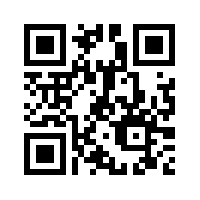
A QR (Quick Response) Code is a square barcode
qrcode.26157027.png

that can be captured with a school iPad using the I-nigma app.


http://a1.mzstatic.com/us/r30/Purple6/v4/0c/8a/18/0c8a183b-33db-5d72-7334-03a568c26566/mzl.gaujwlpp.100x100-75.jpg


A common use of a QR code is to use it to take you to a particular website.  If you open the I-nigma app and position the barcode above so it is in the red square, it will take you to our school website (make sure you have logged on to Watchguard).  

Making QR Codes


If you have websites that you want to share with your students then creating a QR code for them will allow the students to easily find the sites.  You can also create QR codes for short amounts of plain text, which can be used for all sorts of things e.g. a treasure hunt.  And when you really get the hang of it you can record short amounts of audio and link through to them.


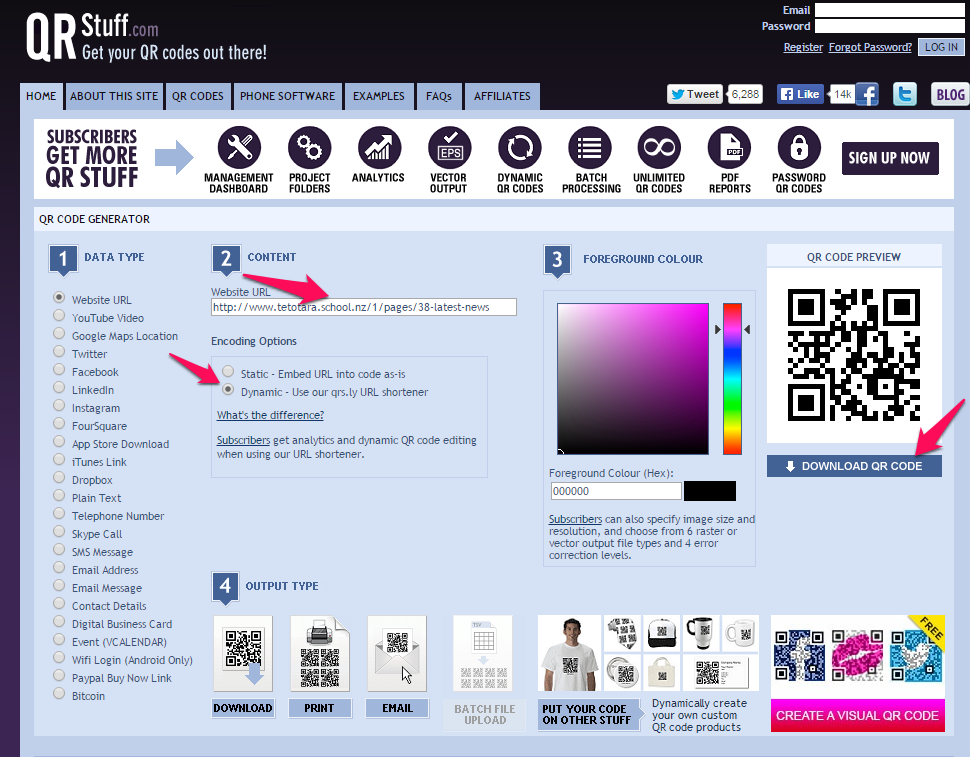
To make your own QR codes you can use a QR code generator on your laptop, like www.qrstuff.com.  


QR code generator.png


Here is how to make your own QR code for a website in three simple steps!


  • Copy the website URL you want to use and paste it into the box
  • Click on the “Dynamic” circle (it makes the QR code easier to scan)
  • Click on “Download QR Code”

Then you will have a picture of your code that you can print or include in a document.

Sunday, 23 November 2014

Why we moved to specified apps and centralised iPad management

Back in 2012 when we introduced iPads to the school we wanted to give the teachers the freedom to experiment with the iPads and download apps they thought might be useful.  All our teachers got a $50 iTunes card, set up their own Apple IDs, and had their iPads configured so if they downloaded an app on one iPad it automatically downloaded it to the other three.

It became clear, however, that this system wasn't ideal.  For one thing, volume purchasing was introduced a bit later but we couldn't really take advantage of the discounts because we didn't know what apps teachers had already purchased.  I ended up doing an app stocktake and found that across our school iPads we had over 600 different apps!

Here are some of the other issues we had:

  • Teachers were forgetting their Apple ID passwords and security questions and because they'd been set up personally there wasn't much I could do to help them.  Sometimes iPads had been passed on to new teachers without getting the security question details - for a while you didn't need them for purchasing apps then all of a sudden you did.  That caught us out.
  • Teachers were not discussing apps and sharing ideas much.  The huge range of apps across the school meant that you might not find someone else using the same ones as you.
  • Some teachers complained that it was difficult to find out which apps were the best ones to use.  They didn't have time to download and compare multiple apps.
  • There was no vetting system to assess whether teachers' app choices fitted the school's educational aims.
  • By paying for only one app per four iPads we weren't obeying Apple's terms and conditions and paying the developers properly for their work.  Once volume purchasing became available in New Zealand we had no excuses not to.
  • Some of the more expensive apps aimed at students with special needs had to be bought for a different iPad every year as the student changed teachers.

For these reasons it was decided that we would move to using school Apple IDs, a specified set of apps and a centralised iPad management system.  We have an App Request Form teachers can use if they have an app they particularly want to use.

We visited a couple of schools using different mobile device management systems to see them in action.  One system cost $30 per iPad to have managed, the other was free.  Ironically it was the free system, Meraki, that seemed to have more functionality.  I'll post about the process involved with moving to Meraki later.

I think you do lose the ease of teachers being able to explore and try new apps by going to specified apps and a centralised iPad management system.  However, here are the many benefits:

  • Having one set of apps that all the teachers in each year level has means that teachers don't have to worry about which apps to select.
  • Teachers can share ideas and support each other more easily.
  • Professional development can focus on apps everyone has.  
  • We can save money by using volume purchasing.
  • If teachers change Year levels they can simply swap iPads rather than having to buy all new apps.
  • The App Request Form allows apps to be assessed for educational suitability by senior management and checked to see if they duplicate an app we are already using.  
  • If we do decide to add an app we can use Meraki to easily push it out to all the iPads that need it.
  • We can deploy the more expensive apps needed by some students with special needs and then pull them back and push them to another iPad as they go through the school.
  • Students will be able to learn how to use an app in one class and then they can carry that knowledge through in the following years as it will still be being used.

Finally, as we move to introducing BYOD next year it means we can use Meraki to easily (I hope!) push out our specified apps to students' devices.


Tuesday, 4 November 2014

Genre Shelving - The students have their final say

It's a busy term for everyone but I thought it was important to follow up with our students about how they are finding the new genre shelving.  I did an initial survey back in March and wanted to see how they felt now that they've been using books shelved by genre for a few terms.  Coincidentally, despite growth in the school there have been some bugs going around and I ended up with exactly the same amount of Year 5/6 students to survey. 

In order to make it quick and make it happen I reduced the survey to just two questions.  Here are the results, compared with the same questions asked in March, prior to shelving by genre:

1. Do you find it easy to choose a book to read?


What a big difference in the number of students who find it hard to choose a book to read.  From 17% in March to 4% in November.  A drop of 13%.  I'm very excited by this!  I love that changing the way the books are shelved made it easier for book selection - this is exactly what I'd hoped for.


2.  Do you think shelving books by genre has made it easier for you to find books to read?


I think this graph shows that our students' expectations of how genre shelving would help them have been met.  97% of our students think that shelving by genre has made it easier for them to find books to read.  Again I'm very happy with this.

The feedback I've had from teachers has also been overwhelmingly positive and I am so pleased that we changed to this way of shelving.  I blogged about some of the challenges earlier (and covered them in a presentation) but I still think these are far outweighed by the benefits.

Monday, 27 October 2014

Moustache Potatoes Comic Club

On the recommendation of my Twitter friend @mrs_hyde I recently read a book called Boy Writers: Reclaiming their voices.  I loved this book.  As the mother of two boys who don't particularly enjoy writing I was fascinated by Ralph Fletcher's look at a writing classroom from a boy's perspective.  The book looks at the things that motivate boys to write.  It talks about the fact that some boys like to use violence in their stories, that they like zany or bathroom humour, and that they like to incorporate pictures in their stories.  We need to acknowledge these things in order to engage them.  

A few years ago I ran a comic club for a term (the Angry Pencils), mostly because I had a student who loved to make comic books and I wanted to give him more ideas.  I had a good turnout, and almost all of the club was boys, but I didn't continue with it as I had other projects to keep me busy.  After reading Boy Writers I decided that I should restart my comic club in order to try to reach some of our reluctant boy writers.

We now have sixteen Year 6 students in the club.  Seven are girls, which is a lot higher than the last time I ran it, but many have come from the Ninja Readers (our book club).  I am pleased that after the first week three more boys turned up, brought along by their friends (I must be doing something right!).

If you're interested in running your own comic club, I'll post what I've been doing every couple of weeks or so.  I'm not a cartoonist or artist myself so I'm using a lot of YouTube experts and books to inspire the kids.  We meet at morning tea so time is limited.  In a way I'm running a flipped model club because we watch a couple of YouTube clips and then I send the students away to practice and watch further clips if they want to by accessing the comic club page on the school website.

Here is what we've done so far:

Week One
  • Generated ideas for a name.  A vote ended in a tie between "Moustache Pencils" and "Potato Quest" and they combined the two to come up with "Moustache Potatoes".
  • Outlined a plan for the next few weeks.  In order to draw a good comic strip we need to have characters, so first up was learning how to draw a basic cartoon face.  In Week Two the plan was to learn to draw figures and then Week Three is moving on to comic strips.
  • Watched a video - Toontorials - Basic Cartoon Face 1.  I encourage the kids to draw while watching the videos I show.
  • Character ideas - I put up different eyes, ears, hair, mouths etc that I'd copied from drawing/comic books.  We talked about mixing and matching different features to come up with different characters.
  • Facial expressions - I put up a page with different expressions and we talked about using expressions to help make your characters come to life and act for you.
  • Website - I showed them the comic club page on the website with the extra videos on it and also the QR code that they could scan if they wanted to watch the videos on the library's iPads during lunch.  The extra videos on the website for Week One are "Toontorials - Basic Cartoon Face 2" and "How to draw 20 different emotions".
  • Books - I showed them some of the library's cartoon and drawing books and also pointed out that you can get good ideas from reading our graphic novels.

Week Two


Update:  I didn't manage to post about this every couple of weeks so here is the link to my other post about the Moustache Potatoes Comic Club.

Sunday, 19 October 2014

How to Create your own Digital Signage - For free

About a year ago my principal came to me and asked if there was some way we could put weekly notices for the school on our website and on the TV in the office.  Although we have now gone with a professional digital signage provider at that point we were interested in doing it with no cost.  I also wanted to make it easy for our team leaders to write up the notices for their team without too much involvement from me - I have better things to do!  Fortunately I had just been to an EduCamp and the way they use Google Presentations to let participants share ideas was fresh in my mind.  Even now, with our professional digital signage, we still use a Google Presentation as an easy way to collaboratively create the weekly notices.

Here is what they look like on our website:


This quickly became the third most popular page on our website (after our home page and newsletter page).  When we recently launched our school app we made sure it had a link to the weekly notices.

In case you are interested in doing something similar, here is how to set it up for yourself, and use it as digital signage (provided you have a TV that can either connect to a webpage or, as in our case, run a slideshow off a USB stick).

First, go into Google Drive and create a new Google Presentation.  Set up the themes how you want them and then share the page (button in top right-hand corner) with the people who will be creating it for you.  Make sure you give them all editing rights.  

At the beginning of each week I make a copy of the previous week's slides (File<Make a copy) and rename it e.g. "Term 4 Week 3 Notices".  Then I share the new slides with our team leaders and give them until the end of the week to fill in their slide.  To make it easier for me to work out whether they have done their slide or not I added the week number in the top right-hand part of the slides. The slide will show the previous week's number until it has been updated by the team leader.

At the end of the week I check that all the slides have been updated and then add them to our school website.  In order to do that I choose File<Publish to the web... and click on the Embed tab.  I change the slide size to custom and change the auto-advance slides to every 5 seconds.  The width I use for our website is 650 px.  I also tick "start slideshow as soon as the player loads" and "restart the slideshow after the last slide".  Then I hit "Publish" and "OK" and I copy the HTML code to embed on the weekly notices webpage.

In order to use the weekly notices slides on our office TV I had to turn them into jpg or png files.  Unfortunately Google hasn't made this as easy as it is in Powerpoint.  You need to click on each slide, one at a time, and then File<Download as<PNG image (.png) (or JPEG image (.jpg)).  Once I had all my images I put photos from around the school in between each one so the slideshow had a weekly notice, school photo, weekly notice, school photo etc.  Now that we have the professional digital signage I split the screen to show the weekly notices and photos at the same time.

Finally, I downloaded the images onto a USB stick and inserted that into our TV and chose the slideshow option in the menu.  The procedure probably varies from TV to TV so I'll leave it up to you to work out how to do that one.

And that's all there is to it.  Professional digital signage is not cheap, you have to buy specialist equipment to run it, one for each TV you want to use.  You can do almost the same thing for free (assuming you already have a TV) and it does look really good in the school office.  It is a nice way to showcase what is going on in the school for the week.  Hopefully I've covered everything you need to know.  I'm happy to answer questions if you get stuck.