Monday, 27 January 2020

Picture Book Shelving Arranged by Subject

Last year, we started to have overcrowding problems in our picture book area, making it harder for our students to browse easily.


Fortunately, our school's furniture budget hadn't been fully spent and I made a good case for how useful new shelving could be.  I asked for different shelving for our non-fiction area, which I'll talk about in another post.  I also asked for new browser bins for our picture book area, which would replace the display shelves and increase the amount of storage space for our picture books.

I decided to use the additional browser bins to implement an idea I'd been thinking about for a while.  I had read about a few libraries which had classified their picture books using subjects rather than the alphabet and I could see the benefits of doing this.  I was keen to enable our teachers to quickly find books related to particular areas they might find useful in their classrooms.  I could see some problems though, namely trying to get all the books to fit neatly into the subject areas when there is the potential for lots of overlaps.  I decided to use both systems - keeping the existing alphabetical shelving, and using the new browser bins to put a subject-based system into effect.

I decided to coincide the change with our stocktake so we had a few months to think about what subjects we wanted.  It also meant that we could add an extra day or two after our stocktake and do all the physical changes needed in both the picture book and non-fiction areas.

Once I had chosen the subject areas, I assigned them different coloured stickers to identify where the books would be shelved. We started by labelling new books with their appropriate stickers, then nearer to the stocktake date we moved on to labelling some of the existing books.  Once labelled we kept them in piles in my office. We changed the location on our library management system (Access-it) to 'Picture Books - (name of subject)'.  Then I realised that to find the location if you've searched for the book, you have to click on the book and then click again to go into the copy information. To make it easier I decided to change the book 'type' from just 'Picture Book' to 'Picture Book - (name of subject)'.  This means that you can see the location information as soon as you click on the book title. It also means that I can easily generate data relating to the circulation of these particular books.

After the stocktake was done we put all the picture books we wanted to reclassify into their subject areas. Once we had all the books in their piles, I realised that one of my proposed subjects, 'Concepts' didn't have very many books. Meanwhile, a second category, 'Nature and Technology', was very large and diverse. I decided to combine 'Concepts' with 'Maths' and split 'Nature and Technology' into two areas - 'Nature' and 'Science and Technology'. Fortunately, we hadn't labelled a lot of these books and were able to make the changes without too much effort.

Here are my final subject areas:

Maths & Concepts
Maths - includes counting, time, shapes
Concepts - includes colours, patterns, opposites, size, perspectives

English & History 
- includes reading, writing, ABCs, wars

Nature 
- includes animals, life cycles, environment

Science & Technology 
- includes inventing, internet safety, engineering

Wordless Picture Books

Maori Culture & Language 
- includes bilingual

Feelings & Life Issues 
- includes mindfulness

Fairy Tales & Fractured Fairy Tales

Diverse Books 
- includes different cultures, special needs, different types of families


We already had a bay for Maori language books. I decided to expand this to include books in English that dealt with Maori culture as I felt it would be useful for teachers to easily access these.

I know 'Wordless Picture Books' is not really a subject, but I wanted teachers to be able to easily find these books. I ran a session for my Teachers' Reading Group on how to use them earlier on in 2019. Here are my slides. I'm hoping to run a session on using Fractured Fairy Tales later on this year.

Esther made temporary signage for each area. I want to get some professionally printed along with our new non-fiction signs.

We only had a week left of school after the stocktake and shelving changes were made so I delayed formally introducing the teachers to the new system. I have a slot during one of the Teacher Only days this week when I will do this.

When we opened the library again at lunchtimes we realised that the smallest children might have difficulty with the height of the new browser bins. I decided to purchase a small step for them to use. There wasn't a lot of choice, a lot of the steps I found were actually to help children reach the toilet and were quite flimsy and not likely to stand up to frequent use. I ended up buying an aerobic step, so I've been joking that I can use it at lunchtime if I need some exercise.

We've been opening the library for one afternoon a week during the holidays, and it's been lovely to see parents making use of the new sections. We had one parent come up and ask if we had any books about maths and we were able to direct her to the 'Maths and Concepts' section. I've also had enquiries in the past about whether we have books relating to autism, and these can now be easily found in the 'Diverse Books' section. I hope that all our new sections will be helpful to our parents and teachers.


Update: Yesterday I spoke to our teachers and talked about the new subject areas in our picture book area.  As I spoke the teachers started spontaneously clapping!  I think it's fair to say that they are very happy with the changes :)

2022 Update - We've done away with the A-Z surname shelving altogether!  Find out more here.


Wednesday, 8 January 2020

Top 15 Books of 2019

In 2018, I did a post listing each of the top 15 books I'd read that year.  This time, I decided to do something different.  I wanted to reach out and share my top books not only with the librarians and teachers who read this blog, but also with our school community.  I wanted to keep things casual, so I chose to do an unscripted video where I picked up my top books and talked about what I liked about them.  I was inspired by the videos that American teacher Colby Sharp makes.

Last year, we continued to add student book videos to our library's Youtube channel, the Library Llamas, and I felt this would be a good place to upload the video to.  I was pleased with the response when I shared it on our library's Facebook page.  I think I'll do it again this year, but put it out a little bit earlier as parents might want to use it for present ideas.


Friday, 4 October 2019

The Power of Zines


This year, one of the options our student librarians had to get their Gold Library Award was to make a book review zine.  I brought this in mid-way through the year, after rediscovering how cool zines are, and after coming across #bookbento on Twitter.  

The Gold Library Award has always been something that only our more self-motivated student librarians achieve, as unlike the Bronze and Silver Awards, students choose whether they want to work towards it, and they do it on their own time. 

I am really pleased with the quality of the zines produced, and also with the amount of times I've seen other students picking up the zines and looking through them.  In the past, we have had students write up book reviews on an A4 piece of paper and we've put these in a folder.  Hardly anyone ever looked in the folder.  I think the cute format helps, as the zines are small and more tactile.  Picking up these little zines and flicking through them is fun.  We keep them in a little box on the issues desk.  

We had some students fold the zines wrong, or forget to add some of the elements, so next year we will offer students pre-folded zines and make a checklist of the items we require.  We will also ask students to have their teachers certify that they have produced their best work, as we had a couple of borderline zines and we think this is the best way to work out what a particular student is capable of producing.

Here is my example of a book bento:


Here is more information about Book Bentos, and in case you're wondering, here's how to make a zine.  

Changing the format of the book reviews to zines has been a big success as it has significantly increased the number of students reading them.  I would highly recommend giving it a go.


Here are our updated instructions for our student librarians (the checkboxes don't work here but you get the idea):


Making a Book Review Zine

  • Mrs Simms can show you how to make one from an A4 piece of paper, or can give you a pre-made one.  Write in the zine while it is folded up, so you don’t end up with any upside-down pages.
  • The aim is to share your love for a book and entice other students to read it
  • Choose a chapter book (fiction or non-fiction) that you love that is in our library (if it’s not in our library, ask for it to be bought).
  • You must work alone
  • DO NOT give away the ending of the book!  Give just enough information to make students interested in reading the book for themselves.
  • Tick the checkboxes off so you don’t forget anything


Pages
  1. Cover - Title of book and author - Make it look awesome!  Use colour!
  2. Short summary of the plot - Don’t give the ending away!
  3. Question - Ask a dramatic question about the plot of the book e.g. What happened after Harry was taken to Hogwarts School of Witchcraft and Wizardry?  
  4. Three-word review - Use: 
    1. A noun that isn’t found in a lot of other books in the library e.g. darts, Titanic, braces, 
    2. An adjective that describes the book e.g. terrifying, hilarious, heart-warming
    3. One other word of your choice
  5. Book Bento - A collection of nicely displayed objects that have featured in your book (Mrs Simms will print out your photo if you need her to. Send it to email address).
  6. Other great books I recommend 
  7. Your name and class
  8. Draw a picture or leave it blank - your choice!


Book Review Zine Checklist
  • I have checked with Mrs Simms that no-one else has chosen the book I want to review
  • The cover page has the title of the book, author, and where it is in the library
  • I have given a short summary of the plot, but not given the ending away
  • I have included a dramatic question about the plot of the book
  • I have made a book bento
  • I have included a three-word review
  • I have recommended some other great books
  • I have included my name and class
  • My teacher has confirmed that this is my best work ___________________  (teacher’s signature)

Sunday, 3 March 2019

Lucky's Book Chat

Over the summer holidays, I had a good think about our Library Llamas Youtube channel.  This is something I set up last year, with the aim of connecting our students with books by taking advantage of a format they enjoy i.e. videos.

I decided to film a new segment for the channel called "Lucky's Book Chat".  I developed this for a number of reasons:

  • I wanted a way to share my own book knowledge.  Not surprisingly, I read quite a lot, and I wanted a way to recommend books to students myself.  Having an adult share books is not as exciting as a Llama though, so, spoiler alert, I became "Lucky the Llama".
  • I wanted to improve the regularity with which we upload videos to the channel.  In terms of establishing a bigger audience, from what I've read it's important to start uploading on a regular basis, preferably at least once a week.  By having a segment that I produce, I can increase the number of videos we upload (although even one video a week can be difficult when I have other work/family commitments).
  • I wanted to broaden the range of students who contribute to the channel.  By not having students commit to being in a Library Llamas Book Club, and instead have them agree to make one video with me, I hope to be able to entice a larger number of students to participate in the channel.


    The Format


    In order to make it easier to be able to regularly produce the segment, I decided to create a general format for the video, which gets tweaked from week to week.  At the start of the video, I have the students tell Lucky a joke.  They pick the joke, the only criteria being that they'd have to be comfortable telling it to Mrs Fraser (our acting principal).  Then both Lucky and the student talk about a great book that they have read.  I try to have some kind of prop that leads into the discussion about the book that Lucky has read.

    After the book discussion, Lucky says that they have to go and do something a bit unusual - parachuting, skiing etc.  Then, while the student is doing a voice-over asking for subscribers and comments, there is a green screen, stop motion or other creative scene with the student interacting with their book in some way.  This part is something I really enjoy, but it's stretching my film and editing skills!  I'm learning a lot from YouTube tutorials :)


    What I've Learned so Far


    • To keep the chat conversational, I don't have the students learn a script.  I ask them to think about a joke, and what they want to say about their book, and what they might want to do creatively at the end.  What I have found is that I need to go over with them a bit more about what they've decided to say about their book.  At the moment they also need help with the creative side, although once I tell them a general idea then they build on that really well.  As they watch more of the Lucky's Book Chat videos, and see more of what can be done, I imagine they will have more ideas of their own.
    • I have a half hour slot in which I film, and that means things need to move quite quickly.  I do this during class time, and not at morning tea like we did last year, as it means there is much less background noise.  Having a different child each week means that the teachers have been happy for me to take them out of class for this, as it is a one-off.
    • I do the filming myself, which means I turn the camera on and then go and hide behind the chair.  The problem with this is that I can't see what the students are doing, and I am always scared that I'm not hidden properly behind the chair!  It has been working fairly well though.


    If you like this video then please like and subscribe!  Even better, leave a comment if you like the books we discuss.

    Tuesday, 1 January 2019

    Top 15 Books of 2018

    I haven't ranked my favourite books before.  In previous years, I've just listed my five star reads in different categories (picture book, fiction, non-fiction etc).  One thing I've noticed from putting the covers of the books I've read on my door is that I've had a fair few students ask me to name my top five books I've read, or even worse, my top three!  It's hard!  But I am up to the challenge, and this year I'm going to be strong and decisive and choose the top 15 books I've read (I can't possibly choose any less than that!).  


    15.  How to Bee by Bren MacDibble

    Bren MacDibble won a number of NZ and Australian book awards for her story about a future where real bees are extinct and children must pollinate flowers by hand.  It wasn't surprising to find out that Bren had grown up on a farm, as her descriptions of life on one are particularly vivid.  This book isn't all about farms though, as Peony's mother takes her from the home she lives in with her grandfather and sister and brings her to the city to help her earn money.  Domestic violence, poverty and agoraphobia are all part of this impactful and compelling book.


    14.  Boy Underwater by Adam Baron, illustrated by Benji Davies

    Cymbeline Igloo has never been swimming but somehow manages to boast that he's a brilliant swimmer just before his first school swimming lesson.  He's borrowed a pair of his dad's old swimming togs, and let's just say that size does matter when it comes to togs!  This book has an amazing combination of laugh-out-loud humour and heartbreaking sadness.  It deals with some big issues - like death and mental health.  The nine-year-old protagonist, Cymbeline Igloo, is a lovely character, whose voice shines through as being really authentic.


    13.  The Unlikely Adventures of Mabel Jones by Will Mabbitt, illustrated by Ross Collins

    This is a hilarious story about Mabel Jones, who commits "The Deed" and ends up on The Feroshus Maggot (a pirate ship).  I listened to the audiobook, which I highly recommend because the narrator, Toby Jones, is marvellous with voices.  I love the characters' names, like Omynus Hussh and Captain Idryss Ebenezer Split, and the use of the narrator (who stops in the middle of the action to eat a pickled onion!).  One of our Year 5 & 6 classes read this book and we got to Skype with Will Mabbitt, which was a lot of fun.


    12.  Mighty Jack and the Goblin King by Ben Hatke

    I loved "Mighty Jack" and this sequel is just as fantastic.  Ben Hatke, who also wrote the "Zita the Spacegirl" series, is one of my favourite graphic novel author/illustrators.  In this book, there's lots of action and drama, with both Jack and Maddy getting to fight the bad guys.  The story is interesting, the art is great, and the last page....wow!  I can't wait for the next book.


    11.  The Year of the Dog by Grace Lin

    This was another book I enjoyed listening to in audio form this year.  Pacy, also known as Grace, is Taiwanese-American and this book gives a nice glimpse into what everyday life for her is like.  I really appreciated this beautifully written insight into the life of someone with a different culture to me.


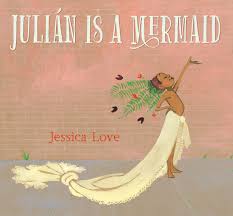
    10.  Julián is a Mermaid by Jessica Love

    Julián is riding the subway with his grandmother when he sees women dressed up as mermaids.  He is captivated and on his return home, he sets about creating his own costume made from a curtain and a fern.  It is the grandmother's reaction to Julián's outfit that makes this picture book so heart-warming.  The illustrations are also special, with many of the background characters unique and memorable.


    9.  The Sloth Who Came to Stay by Margaret Wild, illustrated by Vivienne To

    This is a lovely story about the importance of slowing down and taking the time to appreciate things.  Our Year 5 & 6 students loved it, it came runner-up in our Picture Book World Cup.


    8.  The Day You Begin by Jacqueline Woodson, illustrated by Rafael López

    Jacqueline Woodson's poetic text combines with the striking art of Rafael López in this wonderful picture book.  It starts with "There will be times when you walk into a room and no one there is quite like you" and goes on to encourage children to share their stories and find friends that are "a little like you - and something else so fabulously not quite like you at all".  Beautiful.


    7.  Waking the Monsters by Judd Winick

    The Hilo series of graphic novels is one of my all-time favourites and this, the fourth book in the series, did not disappoint.  The artwork is superb, especially the giant robot monsters that are intent on squashing towns.  Izzy's inventions - a tiny, floating rhino that sneezes and keeps bugs away without hurting them, a skunk that makes popcorn, a parrot that sings in Italian, made from a microwave oven - are hilarious.  Yet the book doesn't shy away from some more emotional storylines.  The backstory about why Razorwark is fighting humans is very poignant.


    6.  Wishtree by Katherine Applegate

    This book is told from the perspective of an oak tree called Red.  This immediately made me apprehensive, because it didn't sound like the kind of book I'd enjoy (trees can't move, how was this book going to be interesting?).  However, I'm a fan of Katherine Applegate's "The One and Only Ivan" so I gave this book a go.

    I was pleasantly surprised - this book gave me the feels!  There are lovely interactions between Red and his friend, a crow called Bongo, as well as the other animals that call Red home.  Humans are part of the story too, with the arrival of a new family to Red's neighbourhood making his role as "wishtree" even more important.  Add to that the lovely dashes of humour in the book (I love the way the animals name their children!) and this turns out to be a small but perfectly-formed book.


    5.  Dear Sister by Alison 

    This story is a lovely exploration of a brother/sister relationship when there is a large age gap between them.  It is told via a series of letters and messages from the brother to his sister.  The book is short and filled with excellent illustrations, making it instantly appealing to students.  It is a fun, sweet book that manages to make you go "awwww".


    3=  Nevermoor by Jessica Townsend

    Morrigan Crow is cursed, blamed for all the misfortunes of those around her, and due to die at midnight on Eventide.  Instead, she is whisked away in a giant metallic spider to a magical city named Nevermoor.  

    There are some wonderful characters in this book, and author Jessica Townsend has done a fantastic job of making the world come alive in your imagination.


    3=  Wundersmith by Jessica Townsend

    Wundersmith is the second book in the Nevermoor series, and it was, thankfully, just as good as the first.  Which is why I have made them both 3rd equal!  I tried very hard to read Wundersmith slowly so I could remain in Nevermoor as long as possible!  

    Jessica Townsend avoids overly long descriptive passages and yet I could still see Nevermoor really vividly in my mind.  I really enjoyed Morrigan's new adventure and now it is on to waiting impatiently for the next one.


    One of my highlights of 2018 was being able to hear Jessica Townsend speak at Southwell School.  I took a carload of students, the first ones who read her book, and as soon as she walked in they went "ohhhhh" and were starstruck.  "She's my dream author," said one.


    2.  Restart by Gordon Korman

    Chase falls from a roof, hits his head and loses his memory.  When he returns to school he realises that while some kids like him, others appear scared of him, and he doesn't know why.  Those two sentences are all that's needed to entice many students to read this book!  

    I love that this book is told from multiple perspectives as it really adds insight into the impact of the actions of the bullies in this story.  There's some great humour in the book too, making it a lot of fun to read. 


    1.  Front Desk by Kelly Yang

    Mia Tang is a Chinese immigrant to the United States.  She lives in a motel and she manages the front desk while her parents clean the rooms.  Mia experiences bullying, racism and poverty and both her family and other immigrants in the story are taken advantage of and treated poorly.  Despite these circumstances, Mia shows tolerance, hope, perseverance and love.  

    This is an important story that will hopefully encourage children to understand the experiences of new immigrants better and to feel more empathy with them.  It's a book that I've been recommending to anyone who will listen!

    NB: Make sure to get this cover, we got a second copy with a different cover that was far less appealing to our students (we ended up copying this cover and pasting it over the other copy).

    Sunday, 23 December 2018

    To All the Books I've Read This Year

    Back in July, I posted about displaying the covers of the books I had read.  Have a look at that post for my rave about how successful it is as a form of book promotion.  

    On Wednesday, I opened the library for the first of our summer holiday afternoon sessions.  That was the last day the library will be open for the year, and I took the opportunity to take photos of the library door and adjacent windows that were covered in the books that I have read in 2018.


    107 books - must try to beat that next year!  When we open again on the 9th of January (just for the afternoon) I'll remove all the covers and put up some new ones.  One of our library volunteers also helps out at another school and she is going to take the covers and turn them into a lovely display for them.

    I have read some absolutely fantastic books this year and I'll be posting my top 15 early in the new year.  I was going to start early like some bloggers have, but I'm listening to this great audiobook at the moment that I strongly suspect will make it into the top 15...

    Have you read the end-of-year posts from some of the wonderful children's literature bloggers?  Travis Jonker is a U.S. elementary school librarian who writes 100 Scope Notes.   He has listed his top 20 books for the year.  The National Library's blog lists the 2018 outstanding children's and YA books.  However, due to the sheer number of posts, it is Betsy Bird's A Fuse #8 Production with her 31 days, 31 lists posts that are responsible for most of the rather large piles of library books teetering on my floor.  At least I'll have plenty of books to put on my door & windows next year! (only counting the ones I read in 2019, I'm disappointed I won't get to put the ones I read for the rest of the year up there).

    Have a lovely Christmas and a Happy New Year!  For Christmas we're going up to my brother's place in Auckland and will spend some time near the beach, if the weather behaves itself!  

    Saturday, 13 October 2018

    Skyping Author Will Mabbitt

    Last term, we had a Skype visit with author Will Mabbitt.  It was the first time we've ever done one, and it was so successful I hope that it won't be the last!  If you haven't done a Skype visit before, here's a bit of information on how it came about and what we did.


    Setting up the visit


    The visit was set up through social media.  I had tweeted to Will when his books were in our Picture Book World Cup earlier this year.  'I Can Only Draw Worms' made it to the semi-finals of the Year 5 & 6 Picture Book World Cup, and 'This is Not a Bedtime Story' (with Fred Blunt illustrating) got to the semi-finals of the Year 1 & 2 Picture Book World Cup.  I hadn't heard of Will prior to that, but after both his picture books did so well I tweeted to Will that I was going to seek out his other books.  He mentioned that Year 5 & 6 students would like his Mabel Jones series and that he did free Skype visits for schools reading them.  Fortunately, I found an enthusiastic teacher who agreed to read "The Unlikely Adventures of Mabel Jones", which her students loved (I listened to the audiobook version, which is hilarious - Toby Jones, who narrated, does great voices for each of the characters).

    Once the class had finished the book (and confirmed that they liked it!), I contacted Will again and we set up a time to Skype with him.  He's English so there was a big time difference to contend with.  We arranged to start at 9.15am our time, which was 10.15pm for him.  I was REALLY careful to get the dates and times right for both of us.  It was Tuesday for him and Wednesday for us and I didn't want that to cause any confusion.

    Will sent me his Skype details and I made sure that Skype was working on my laptop (I tried to Skype with someone outside the school).  I'm glad I did as there were some network issues that our I.T. guy had to fix.  On the morning of the Skype, before class started, I gave Will a quick call to make sure everything was still working.


    Skyping with Will


    I won't lie, it was a bit awkward to start with.  There's a delay while you wait for a reply and Skype is not my favourite medium of communication.  I also had technical problems!  Argghhh!  I had to reconnect twice before I stopped airplaying to our TV and just used my laptop.  It wasn't ideal but at least the connection stopped cutting out.

    Once we got going, the Skype visit was a huge success.  The kids had thought of some good questions to ask, and Will was as funny as his books are.  We learned a lot about things like what changes are made when his books are published in different countries, why it's good to be the author AND the illustrator of a book (you get more money!) and why Will writes about pickled onions.  Will then read from his picture book "I can only draw worms" and talked about his latest book "The Embassy of the Dead".  Afterwards, Rebecca, the class teacher, talked with her class about what they had learned and then shared that learning, and some photos, on Seesaw (our school platform for sharing learning with parents).

    The kids really enjoyed having Will's book as a class read and then being able to talk with him about it.  The following week we happened to have a Scholastic Book Fair in the school and luckily for Will his "Embassy of the Dead" book was available.  I had to order in extra copies as it proved to be very popular.  There are also still reserves on the library copies of the other two books in the Mabel Jones series.


    I love this photo - doesn't it look like Will has just worked out he's trapped in a laptop?!!


    More authors to Skype


    On Twitter recently, I found a link to an old article about authors who Skype with classes and book clubs for free.  Given it was written in 2009, I would use this as a starting point and investigate the authors further on their own websites.  If you're in NZ and belong to the NZ Book Council, they offer Skype visits as one way of bringing a writer or illustrator to your school.  Nothing beats a real live author/illustrator visit but Skype is a great alternative when a personal visit isn't possible.  Talking with an author straight after you have read their book is a special experience and definitely worth the effort if the author is willing to give up their time.

    Sunday, 22 July 2018

    Fun with Library Llamas

    Our book club's Youtube channel, the Library Llamas, has been up and running for over four months.  Earlier this year, I blogged about getting started.  We now have 40 subscribers, 18 videos (with two more coming as soon as I finish editing them), and over 1,000 views.  It has been a big learning curve, but a fun one.  

    One Club becomes Two


    It became clear that if students didn't want to appear on camera then they didn't get as much out of the club.  I had already planned to start a Year 5 book club after I got through Book Week in Term 2, and I decided to allow those Year 6 students who weren't connecting with the Library Llamas to join as well.  The new club, the Pink Fluffy Unicorns (yes, the boys voted for that!), is run using the key ring challenge format that was so successful last year.  I now have around 14 students in the Library Llamas (more manageable) and 40 in the Pink Fluffy Unicorns (!).

    One thing that I'm proud about is that both my book clubs have students in them that are dyslexic and/or struggling readers.  They're often brought along by their more bookish friends, but they stay because they're comfortable in the club and are able to read and discuss books at the level that is right for them.

    Playlists


    Initially, the kids all wanted to set up their own themed 'channel' within our channel.  So far though, I've not had any of them do a second video on the same theme!  Lately, I've been encouraging students to make videos that tie in with two areas:

    • Llama drama - scenes based on books
    • Llama listens - a short book review with our llama puppet (which they get to name).
    We also have 'Book Buzz', which is the interviews we've done with visiting authors and illustrators.  I've enjoyed these interviews and the kids have done really well with them.  The feedback we've had from our guests has been positive too, with one saying that they felt so special when asked to be interviewed.

    The other playlist we have is 'Double Trouble', which has more in-depth book reviews, done by two student librarians (not necessarily Library Llama members) wanting to earn their gold certificates.  I do give student librarians the option of getting their gold certificate by doing written book reviews, I am careful not to require on-camera appearances as that can disadvantage shy students.

    Llama Drama!


    One of our Year 2 classes really enjoyed this video:  


    Apparently, several of the students went around afterwards yelling "Roar!, roar!, roar!" all around the playground!  They also tried it in the Reading Wonderland, where the video was shot, but were told off by Esther (our library assistant who unfortunately hadn't seen the video!).

    Lessons from Filming


    • One of the biggest technical problems we have is that we often film at morning tea, and it is very noisy outside.  I also think we could improve with better camera techniques, so I have contacted our local tertiary institution and am in the process of setting up a visit from a person from their Moving Image team.  I think the kids will enjoy getting ideas to make their videos better, I know I will.
    • So far, I have turned down one video after we filmed it.  It is a fine line, I don't want to crush creative ideas, but at the same time there does need to be a certain standard for our videos.  Fortunately, the boys took it well and have gone on to make other, better, videos.
    • I accidentally filmed one video where the boys were wearing their name badges!  I'm trying to work out if I can blur these somehow or if we will need to reshoot.  I do specify that due to privacy reasons all students must remove their name badges, but I'm often busy filming and organising and I obviously forgot to remind them this time.

    Author Feedback


    One thing that has been a thrill for the students is when they've received feedback from the authors of the books they have reviewed.  Here are a couple:


    The students are still full of energy, ideas and enthusiasm and I'm looking forward to seeing what we come up with for the rest of the year!